
A Practical Solution for Organized Battery Management
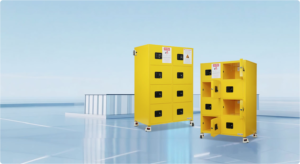
The BC04S Battery Charging and Storage Cabinet is a practical cabinet platform developed for organizations that require a more structured approach to battery charging, temporary storage and routine handling. Its compartment-based design helps create a clearly defined location for battery management within workshops, equipment service areas and fleet operations.
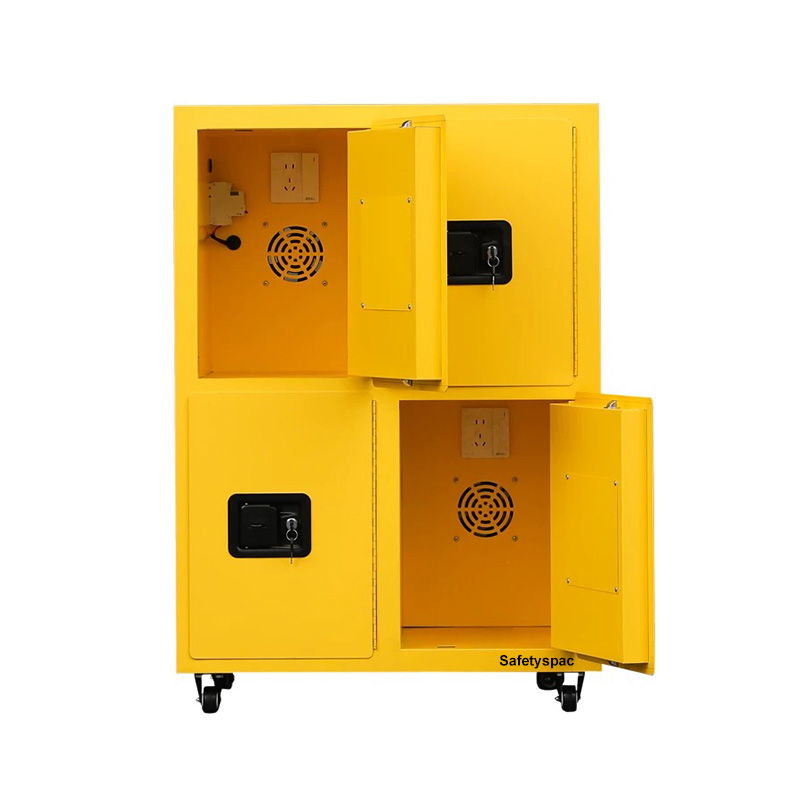
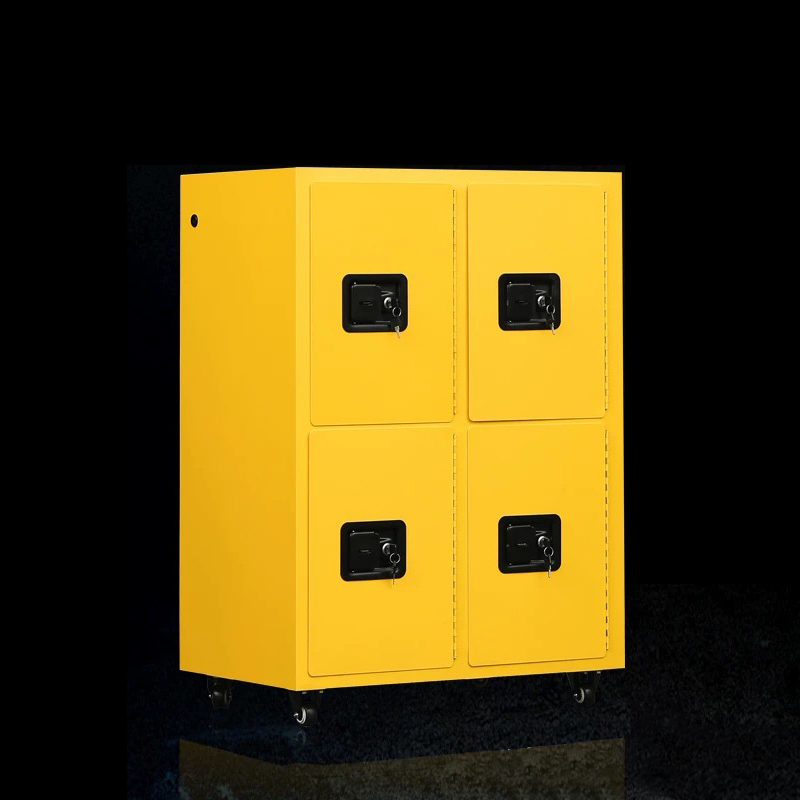
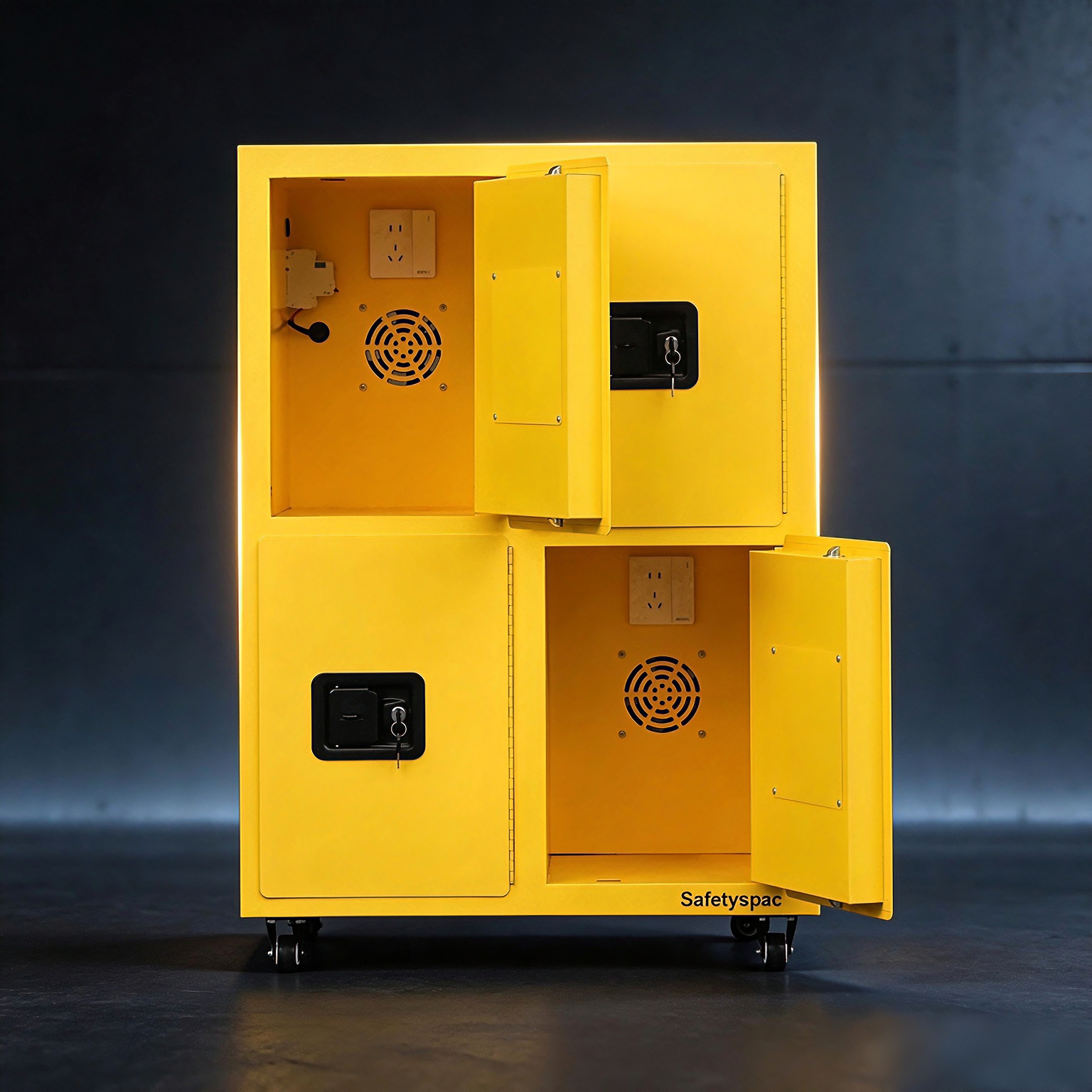
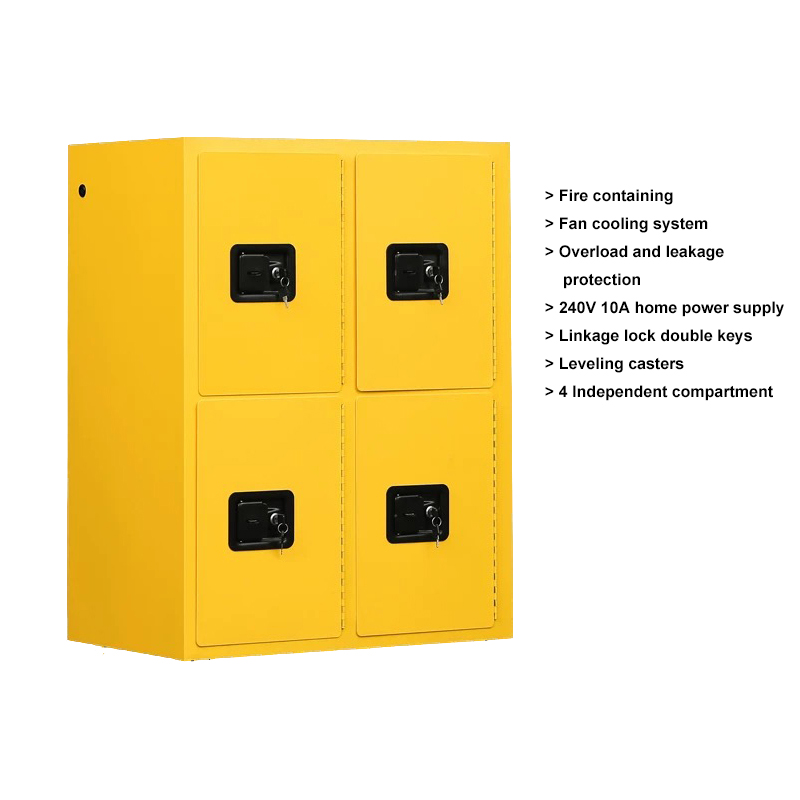
With four individually accessible compartments, the cabinet supports the separation of batteries according to user, vehicle, work order or operating requirements. This arrangement can help teams maintain a more organized working environment and establish repeatable battery handling procedures across daily activities.
Rather than providing a fixed solution for every application, the BC04S can serve as a configurable cabinet platform. Dimensions, ventilation arrangements, electrical interfaces, door hardware, finishes and accessories can be reviewed according to the requirements of each project.
Designed Around Practical Daily Operation
The design of a battery cabinet should take into account how batteries are received, stored, accessed and prepared for their next use. The BC04S combines a compartment-based layout with practical cabinet features that can be adapted to different operational environments.
Four Individual Compartments
Four separate compartments provide individually accessible spaces for battery handling. This layout can help operators distinguish between batteries assigned to different users, vehicles or tasks, while keeping storage locations clear and easy to identify.
Ventilated Cabinet Structure
Ventilation openings and optional fan arrangements can be considered as part of the cabinet configuration. The final ventilation solution should be evaluated in relation to battery characteristics, charger specifications and installation conditions.

Lockable Door Arrangement
Individual cabinet doors with lockable hardware support controlled access in shared working areas. Lock types, opening directions and access arrangements can be reviewed to suit different equipment management procedures.
Configurable Cabinet Platform
Cabinet dimensions, compartment arrangements, surface finishes, labeling and compatible accessories can be discussed during the engineering review stage. This supports a project-oriented approach instead of relying solely on a fixed standard configuration.
A More Structured Approach to Battery Handling
In busy maintenance and service environments, batteries may move between charging, inspection, temporary storage and daily use. A clearly organized cabinet arrangement helps define where batteries should be placed and how they can be accessed during routine operations.
Clearer Battery Organization
Designated compartments can help teams establish consistent storage locations and simplify the identification of batteries assigned to different activities.
More Convenient Individual Access
Operators can access a designated compartment without requiring all storage areas to be opened during routine handling.
Better Alignment with Site Procedures
The cabinet can form part of an organized battery management workflow when combined with suitable operating procedures, compatible charging equipment and site-specific risk controls.
Suitable for a Range of Professional Workflows
The BC04S can be evaluated for a variety of professional environments where battery management requires a defined cabinet location, individual compartment access and a configuration appropriate to the intended operation.
Workshop Charging Areas
Workshops handling batteries throughout the working day can use a defined cabinet arrangement to organize temporary storage and planned charging activities, subject to the suitability of the final configuration.
Fleet Maintenance Operations
Fleet and service organizations may use individual compartments to support battery allocation across vehicles, maintenance tasks and operational shifts.
Equipment Rental Facilities
Equipment rental teams can review compartment layouts for managing batteries during return, inspection, preparation and dispatch workflows.
OEM Equipment Integration
OEM customers can discuss project-specific cabinet dimensions, interfaces and structural requirements as part of a wider equipment integration project.
Configured Around Your Project Requirements
Different battery applications may require different cabinet structures, electrical interfaces, ventilation arrangements and operating considerations. The BC04S provides a starting point for discussing a configuration that reflects the intended battery type, equipment arrangement and installation environment.
During project review, customers can share drawings, target dimensions, battery quantities, charging requirements and any preferred access or finishing details. This information helps define the scope of customization and identify which technical details need to be confirmed before quotation or production.
Dimensions & Capacity
Ventilation & Interfaces
Access & Door Hardware
Finishes & Accessories
Note: Available configurations depend on technical feasibility and project evaluation. Final specifications must be confirmed before production.
What Information Helps Us Prepare Your Quotation?
To review a suitable BC04S configuration, it is helpful to understand the equipment and working conditions involved. Even a preliminary drawing or a short requirement list can provide a useful starting point for technical discussion.
- Battery type, quantity and approximate dimensions
- Intended charging or storage arrangement
- Installation environment and available space
- Preferred cabinet dimensions and compartment layout
- Electrical interface and ventilation requirements
- Door hardware, finish, labeling and accessories
- Estimated order quantity and project requirements
Our team can review the submitted requirements, clarify available configuration options and identify any additional information needed to proceed with a quotation.
Description
A Practical Solution for Organized Battery Management
The BC04S Battery Charging and Storage Cabinet is a practical cabinet platform developed for organizations that require a more structured approach to battery charging, temporary storage and routine handling. Its compartment-based design helps create a clearly defined location for battery management within workshops, equipment service areas and fleet operations.
With four individually accessible compartments, the cabinet supports the separation of batteries according to user, vehicle, work order or operating requirements. This arrangement can help teams maintain a more organized working environment and establish repeatable battery handling procedures across daily activities.
Rather than providing a fixed solution for every application, the BC04S can serve as a configurable cabinet platform. Dimensions, ventilation arrangements, electrical interfaces, door hardware, finishes and accessories can be reviewed according to the requirements of each project.
Designed Around Practical Daily Operation
The design of a battery cabinet should take into account how batteries are received, stored, accessed and prepared for their next use. The BC04S combines a compartment-based layout with practical cabinet features that can be adapted to different operational environments.
Four Individual Compartments
Four separate compartments provide individually accessible spaces for battery handling. This layout can help operators distinguish between batteries assigned to different users, vehicles or tasks, while keeping storage locations clear and easy to identify.
Ventilated Cabinet Structure
Ventilation openings and optional fan arrangements can be considered as part of the cabinet configuration. The final ventilation solution should be evaluated in relation to battery characteristics, charger specifications and installation conditions.
Lockable Door Arrangement
Individual cabinet doors with lockable hardware support controlled access in shared working areas. Lock types, opening directions and access arrangements can be reviewed to suit different equipment management procedures.
Configurable Cabinet Platform
Cabinet dimensions, compartment arrangements, surface finishes, labeling and compatible accessories can be discussed during the engineering review stage. This supports a project-oriented approach instead of relying solely on a fixed standard configuration.
A More Structured Approach to Battery Handling
In busy maintenance and service environments, batteries may move between charging, inspection, temporary storage and daily use. A clearly organized cabinet arrangement helps define where batteries should be placed and how they can be accessed during routine operations.
Clearer Battery Organization
Designated compartments can help teams establish consistent storage locations and simplify the identification of batteries assigned to different activities.
More Convenient Individual Access
Operators can access a designated compartment without requiring all storage areas to be opened during routine handling.
Better Alignment with Site Procedures
The cabinet can form part of an organized battery management workflow when combined with suitable operating procedures, compatible charging equipment and site-specific risk controls.
Suitable for a Range of Professional Workflows
The BC04S can be evaluated for a variety of professional environments where battery management requires a defined cabinet location, individual compartment access and a configuration appropriate to the intended operation.
Workshop Charging Areas
Workshops handling batteries throughout the working day can use a defined cabinet arrangement to organize temporary storage and planned charging activities, subject to the suitability of the final configuration.
Fleet Maintenance Operations
Fleet and service organizations may use individual compartments to support battery allocation across vehicles, maintenance tasks and operational shifts.
Equipment Rental Facilities
Equipment rental teams can review compartment layouts for managing batteries during return, inspection, preparation and dispatch workflows.
OEM Equipment Integration
OEM customers can discuss project-specific cabinet dimensions, interfaces and structural requirements as part of a wider equipment integration project.
Configured Around Your Project Requirements
Different battery applications may require different cabinet structures, electrical interfaces, ventilation arrangements and operating considerations. The BC04S provides a starting point for discussing a configuration that reflects the intended battery type, equipment arrangement and installation environment.
During project review, customers can share drawings, target dimensions, battery quantities, charging requirements and any preferred access or finishing details. This information helps define the scope of customization and identify which technical details need to be confirmed before quotation or production.
Dimensions & Capacity
Ventilation & Interfaces
Access & Door Hardware
Finishes & Accessories
Note: Available configurations depend on technical feasibility and project evaluation. Final specifications must be confirmed before production.
What Information Helps Us Prepare Your Quotation?
To review a suitable BC04S configuration, it is helpful to understand the equipment and working conditions involved. Even a preliminary drawing or a short requirement list can provide a useful starting point for technical discussion.
- Battery type, quantity and approximate dimensions
- Intended charging or storage arrangement
- Installation environment and available space
- Preferred cabinet dimensions and compartment layout
- Electrical interface and ventilation requirements
- Door hardware, finish, labeling and accessories
- Estimated order quantity and project requirements
Our team can review the submitted requirements, clarify available configuration options and identify any additional information needed to proceed with a quotation.
Additional information
| Origin | China |
|---|---|
| Brand | SAFETYSPAC |
| Certification | CE,ISO |
| Protect | IP55-65 |
| Lock Type | Key Locks |
| Material | SGCC 1.2mm thk |
| Outer | 1030x960x550mm |
| Locker | 290x420mm |
You may also like…
-
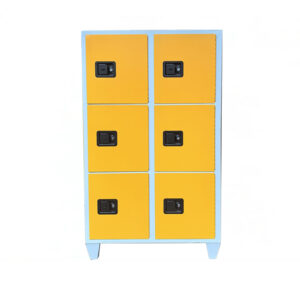
6 cell explosion-proof battery charging cabinet
Intelligent Battery Charging CabinetPlace of OriginChinaBrand NameSAFETYSPACCertificationCE,ISO -

8 cell explosion-proof battery charging cabinet
Battery Swapping CabinetPlace of OriginChinaBrand NameSAFETYSPACCertificationCE,ISO -
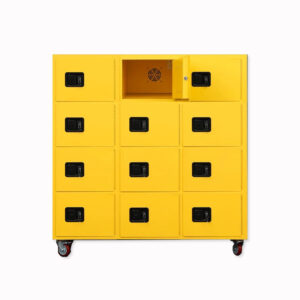
12 cell explosion-proof battery charging cabinet
Battery Swapping CabinetPlace of OriginChinaBrand NameSAFETYSPACCertificationCE,ISO